Details
Abstract
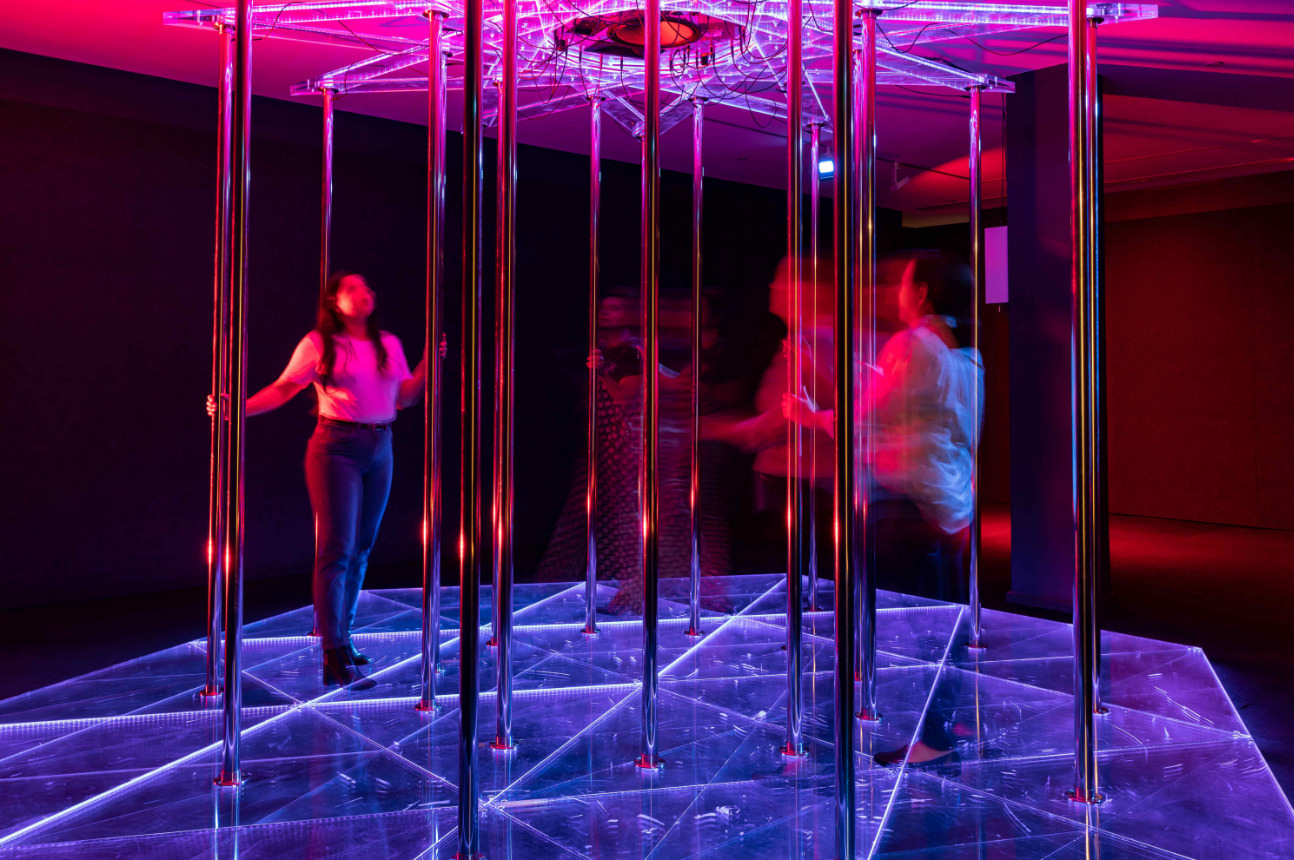
Fort Thunder is a touch play synthesiser built into a play-fort that generates electronic noise as you play.
The bleeps and blurts emitted as your touch intersects the forts twenty-two stainless steel poles are a result of replacing circuitry components with human bodies. Human beings are naturally electric things with capacitance and resistant properties that vary between individuals, so as various people interact with the fort introducing differing values of capacitance or resistance to the circuit it will produce varying audio results. As an instrument the Fort is best played in groups, one person doesn't have enough arms to really get this thing going. The more paths you create for electricity to flow between poles the more complex the sound becomes. Additionally, the audio produced is fed into a light organ that produces a responsive light show in sync with the sound that’s emitted brilliantly from LEDS embedded within the Forts floor surface and eleven pointed star shaped roof.
Bio
Initially classed as a turntablist, Lucas Abela’s work has rarely resembled anything in the field, early feats saw him stab vinyl with Kruger style stylus gloves, bound on electro acoustic trampolines, drag race the pope across the Sydney Harbour Bridge, perform deaf defying duet duels with amplified samurai swords, hospitalised by high powered turntables constructed from sewing machine motors, record chance John Peel sessions with the Flaming Lips, get pole position on Otomo Yoshihides' Ground Zero remix compilation; 'Consummation' by destroying the disc with amplified skewers rather than bothering to sampling it.
Today these turntable roots have become almost unrecognisable, evolving into his infamous glass instrument, the shards being nothing more than a giant diamond tipped stylus vibrated vocally. He has been perfecting the instrument since it's invention in 2003, performing internationally as Justice Yeldham.
After a long performance career his ideas have morphed into participatory sound installations, or more accurately large-scale instruments for musical play devised to switch roles between audience and performer in line with his philosophy that experimental music is more rewarding to play than to observe.